

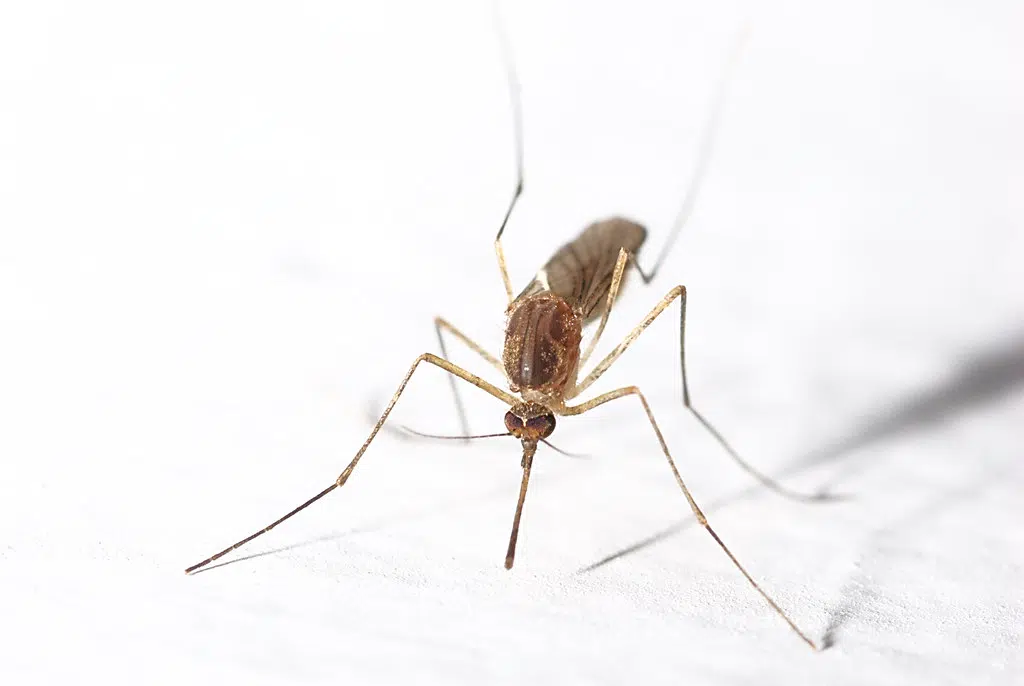
There’s been a rise in mosquitoes infected with West Nile Virus in Nebraska.
According to the Nebraska Department of Health and Human Services, the latest testing data released Friday showed a high number of West Nile samples in the state.
Sixty mosquito pools have been tested positive this year, compared to the average of three positives.
Mosquito pools are samples of mosquitoes collected from across the state pooled together according to species, collection date and collection location. In Nebraska, the Culex species of mosquitoes is the class that carries West Nile Virus.
Due to the increase, the DHHS encourages Nebraskans to take the following preventative measures to avoid mosquito bites.
- Use EPA-registered insect repellent like
- DEET
- Picaridin
- IR3535
- Oil of lemon eucalyptus
- Para-menthane-diol
- 2-undecanone
- Wear clothing and gear that covers exposed skin and treated with 0.5 permethrin which repels mosquitoes
- (Do not use permethrin products directly on skin)
- Take extra precautions when going outdoors at dawn and dusk when mosquitoes are most active.
- Take measures to control mosquitoes indoors and outdoors around the home
- Use screens on windows and doors.
- Empty containers of still water around the home or use mosquito dunks
Most people, 80 percent, who become infected with West Nile virus do not develop any symptoms. About 20 percent of people who are infected develop mild symptoms and recover completely, but fatigue and weakness can last for weeks or months. Less than 1 percent of people who are infected develop a severe illness affecting the central nervous system. Of the neuroinvasive cases, approximately 10 percent are fatal.
Anyone can get infected with West Nile Virus, but people over 50 years of age or older are at greatest risk for severe illness but can occur in people of any age. People with compromised immune systems also are at greater risk.
The mosquito season begins in the summer and continues through fall.
More information about West Nile Virus and risk reduction can be found at https://dhhs.ne.gov/Pages/Mosquito-Borne-Disease-Prevention.aspx.
For vector-borne disease data and statistics, please visit: https://dhhs.ne.gov/Pages/West-Nile-Virus-Data.aspx.