
graphicphoto / Depositphotos.com
NEBRASKA — School is getting back in session for most and that means school buses will be back on the road. The National Highway Traffic Safety Administration has some facts about school bus safety.
According to the NHTSA, the school bus is the safest vehicle on the road and children are much safer taking a bus to school, than traveling by car.
Students are more than 70 times more likely to get to school safely in a bus due to several reasons. One is school buses are the most regulated vehicle on the road and they are designed to be safer than passenger vehicles in preventing crashes and injuries.
According to the NHTSA school buses are,
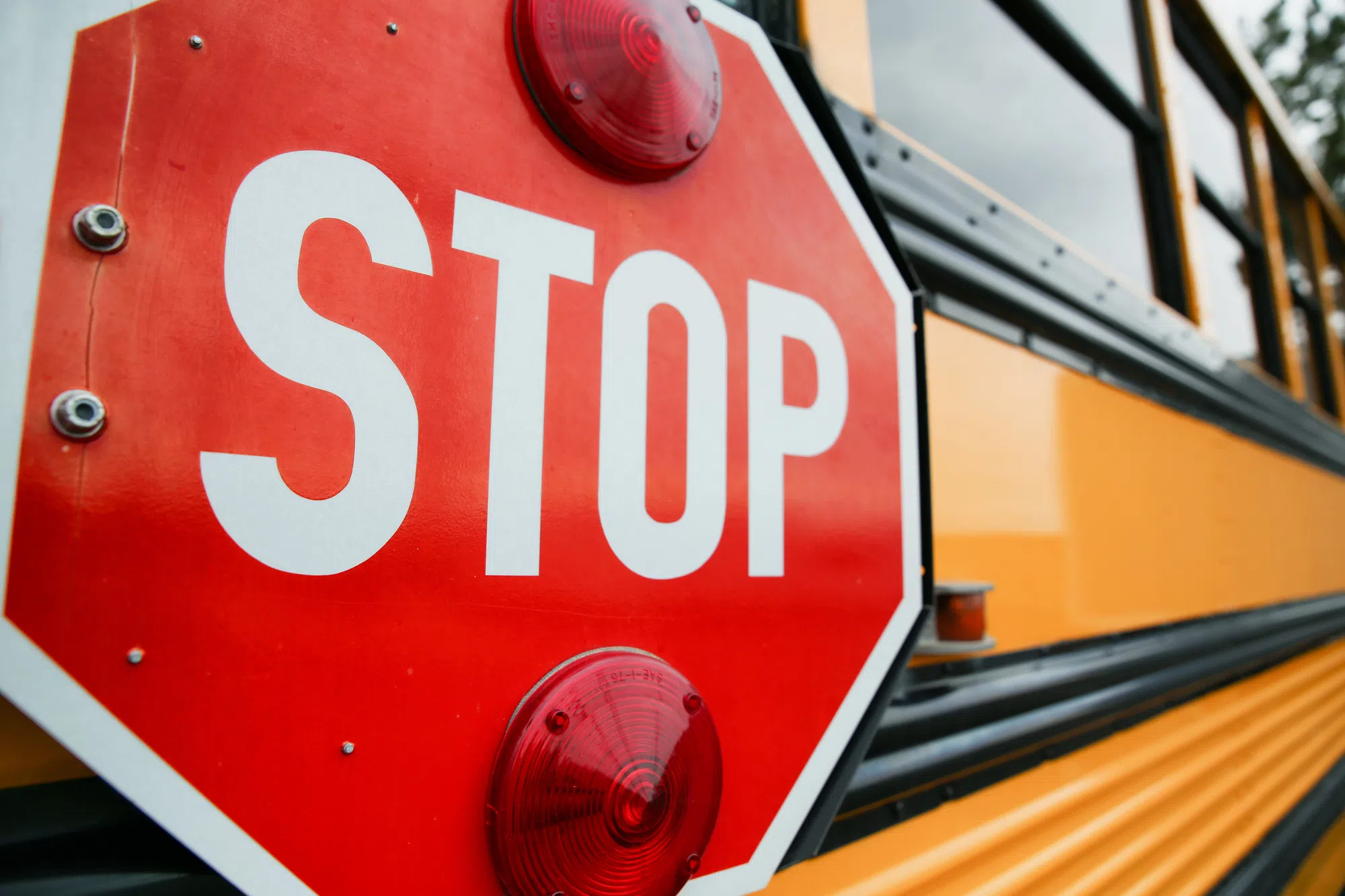
• Different by Design: School buses are designed so that they’re highly visible and include safety features such as flashing red lights, cross-view mirrors and stop-sign arms. They also include protective seating, high crush standards and rollover protection features.
• Protected by the Law: Laws protect students who are getting off and on a school bus by making it illegal for drivers to pass a school bus while dropping off or picking up passengers, regardless of the direction of approach.
While seat belts have been required in cars since 1968 and they play an important role in passage vehicle safety, school buses work differently.
“Large school buses are heavier and distribute crash forces differently than passenger cars and light trucks do. Because of these differences, bus passengers experience much less crash force than those in passenger cars, light trucks and vans,” according to the NHTSA.
“NHTSA decided the best way to provide crash protection to passengers of large school buses is through a concept called “compartmentalization.” This requires that the interior of large buses protect children without them needing to buckle up. Through compartmentalization, children are protected from crashes by strong, closely-spaced seats that have energy-absorbing seat backs.”
“Small school buses (with a gross vehicle weight rating of 10,000 pounds or less) must be equipped with lap and/or lap/shoulder belts at all designated seating positions. Since the sizes and weights of small school buses are closer to those of passenger cars and trucks, seat belts in those vehicles are necessary to provide occupant protection,” according to NHTSA.
The greatest risk to children is not riding the bus, but approaching or leaving one and this is due to other motorists.
According to NHTSA, it is important for parents to teach their children traffic safety rules.
The NHTSA lists the following tips for parents,
“Your child should arrive at the bus stop at least five minutes before the bus is scheduled to arrive. Visit the bus stop and show your child where to wait for the bus: at least three giant steps (six feet) away from the curb. Remind your child that the bus stop is not a place to run or play.”
Get On and Off Safely
When the school bus arrives, your child should wait until the bus comes to a complete stop, the door opens, and the driver says it’s okay before approaching the bus door. Your child should use the handrails to avoid falling.
Use Caution around the Bus
“Your child should never walk behind a school bus. If your child must cross the street in front of the bus, tell him/her to walk on a sidewalk or along the side of the street to a place at least five giant steps (10 feet) in front of the bus before crossing. Your child should also make eye contact with the bus driver before crossing to make sure the driver can see him/her. If your child drops something near the school bus, like a ball or book, the safest thing is for your child to tell the bus driver right away. Your child should not try to pick up the item, because the driver might not be able to see him/her.”
Motorist on the road can also make school bus travel and children safer by following certain practices.
• When backing out of a driveway or leaving a garage, watch out for children walking or bicycling to school.
• When driving in neighborhoods with school zones, watch out for young people who may be thinking about getting to school, but may not be thinking of getting there safely.
• Slow down. Watch for children walking in the street, especially if there are no sidewalks in the neighborhood.
• Watch for children playing and congregating near bus stops.
• Be alert. Children arriving late for the bus may dart into the street without looking for traffic.
• Learn and obey the school bus laws in your state, as well as the “flashing signal light system” that school bus drivers use to alert motorists of pending actions:
• Yellow flashing lights indicate the bus is preparing to stop to load or unload children. Motorists should slow down and prepare to stop their vehicles.
• Red flashing lights and extended stop arms indicate the bus has stopped and children are getting on or off. Motorists must stop their cars and wait until the red lights stop flashing, the extended stop-arm is withdrawn, and the bus begins moving before they can start driving again.
In Nebraska, passing a school bus with the stop arm extended is illegal and punishable by a $500 fine, the same amount for a first time DUI.
School buses and motorists. Both have been part of the morning and afternoon landscape for five generations of school children. Although yellow wasn’t adopted as the school bus color until 1939, school buses have been around since 1915, about as long as the automobile, according to the NHTSA.
In all that time there has been an uneasy coexistence between school buses and motorists. School buses make frequent stops to load and unload students. It is the nature of their business. By law, when a school bus stops to drop off or pick up students, motorists must stop too. But motorists often don’t want to stop. Motorists want to get where they are going, with little interruption and as quickly as they can.
Motorists are asked to obey the law and help protect children in their community while they are going to and from school by bus.