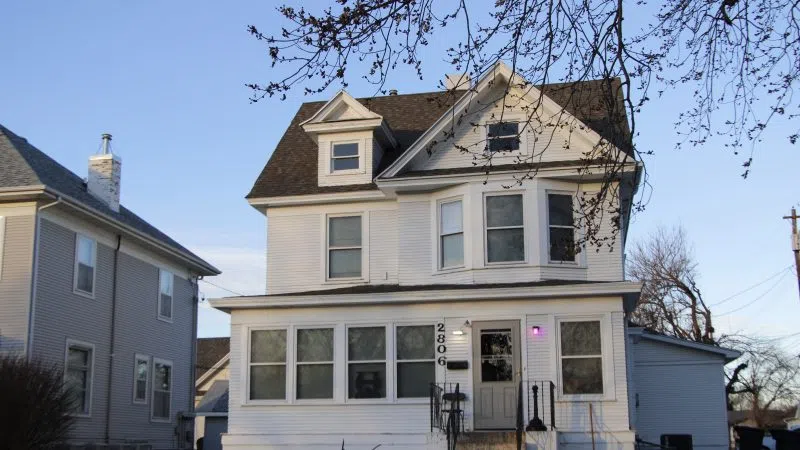

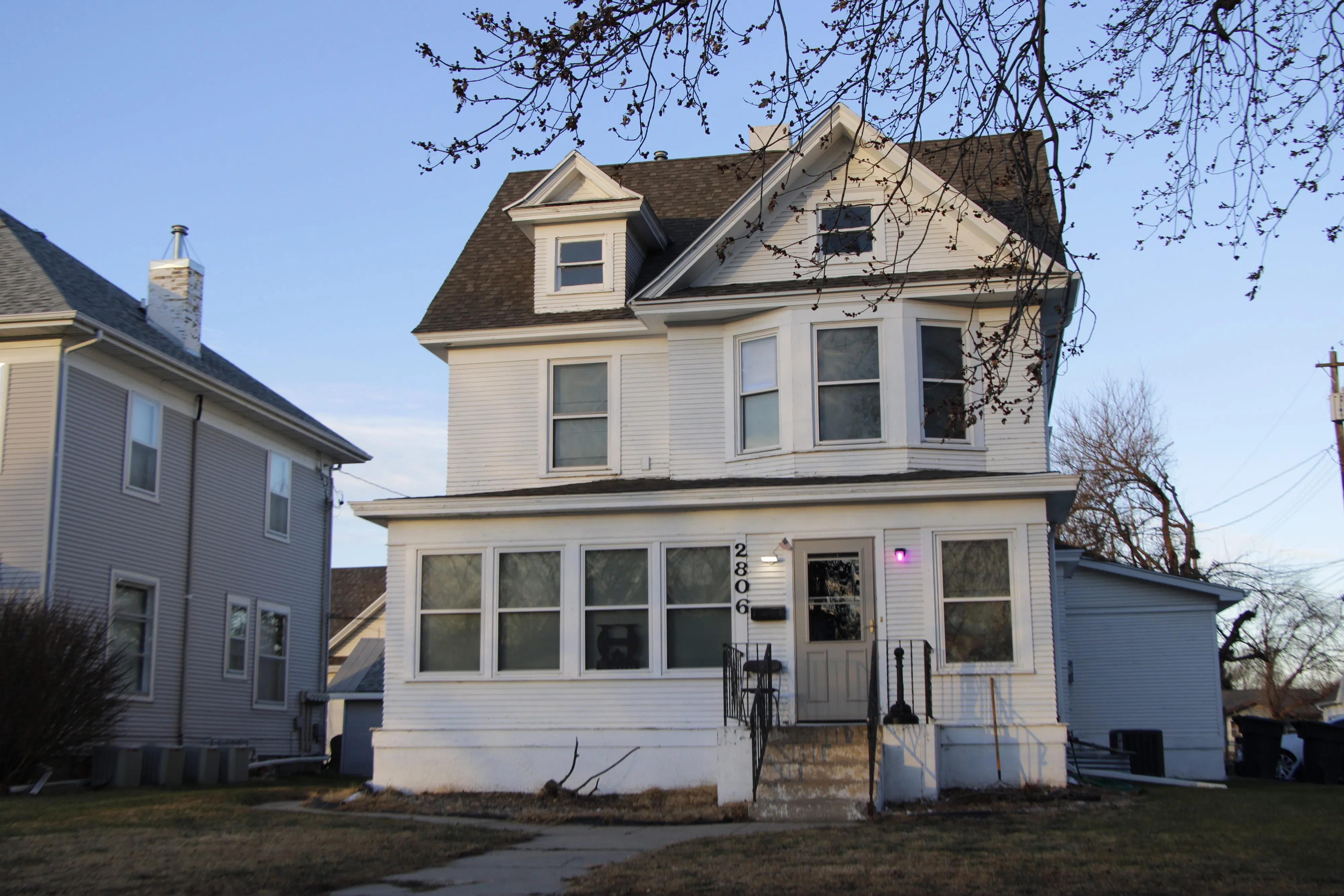
An Oxford House located in Kearney, (Brian Neben, Central Nebraska Today)
KEARNEY — A Kearney resident asked the city council to adopt a limit to the number of non-related occupants in a single family neighborhood during the public comment period of their meeting on Tuesday, Dec. 9.
Kent Schroeder appeared during the public comment period of the Kearney city council meeting to address the topic of Oxford Houses and their occupancy numbers.
Schroeder said that he owns a rental on I Ave. and in 2024, the rental across the street was sold to a limited liability company. Later, Schroeder’s tenant began to complain of the number of people coming and going at all times of day and the number of times law enforcement has been dispatched to the residence.
After some research, Schroeder said the rental had been designated an Oxford House.
“An Oxford House is a shared residence where people in recovery from substance use disorder can live together and support each other in a drug and alcohol-free environment. There is no house manager or outside authority. Oxford House members share the house responsibilities,” according to the Oxford House website.
“An Oxford House member can stay as long as they like, provided they stay drug and alcohol free, are not disruptive, and pay their share of house expenses,” per the website.
“More than 80 percent of Oxford House residents remain clean and sober for the long term even though many of them come from backgrounds that have included lengthy alcohol and drug use, periods of homelessness, and incarceration,” per the Oxford House website.
Schroeder said there are 99 Oxford Houses in the state, four in Kearney, five in Grand Island, over 40 in Lincoln and over 50 in Omaha.
Schroeder noted that Oxford Houses are protected by the Fair Housing Act and must be treated as a single-family home, but they are subject to building codes and occupancy limits.
Schroeder said that the protection under the Fair Housing Act faced legal challenges all the way to the U.S. Supreme Court.
The U.S. Supreme Court case, City of Edmonds v. Oxford House, Inc. (1995), established in a 6-3 decision that recovering alcoholics or addicts are a protected class under the Fair Housing Act ruling that local zoning rules limiting unrelated people, like Oxford House residents, in a single-family home, if not justified by health and safety, are discriminatory.
This decision prevents cities from using family composition rules to block Oxford Houses, ensuring people in recovery have equal housing opportunities, by clarifying that family-size limits, not just family definitions, are subject to FHA scrutiny and require reasonable accommodation.
Schroeder said the fact that the case reached the U.S. Supreme Court shows that opinion is divided on this issue.
“I believe it is now time for the City of Kearney, pursuant to the Fair Housing Act, to adopt a reasonable restriction regarding the maximum number of non-related occupants in a single-family neighborhood,” Schroeder said.
Mayor Jonathan Nikkila said the council would discuss with their legal counsel regarding the issue.
Michael Tye, City Attorney, said that at the very least, the city staff is working to update some of the definitions in their code that are outdated.
Tye did note that these types of occupancy limits have been under discussion in peer communities and mainly revolve around what restrictions can be put in place while being cognizant of the Fair Housing Act.