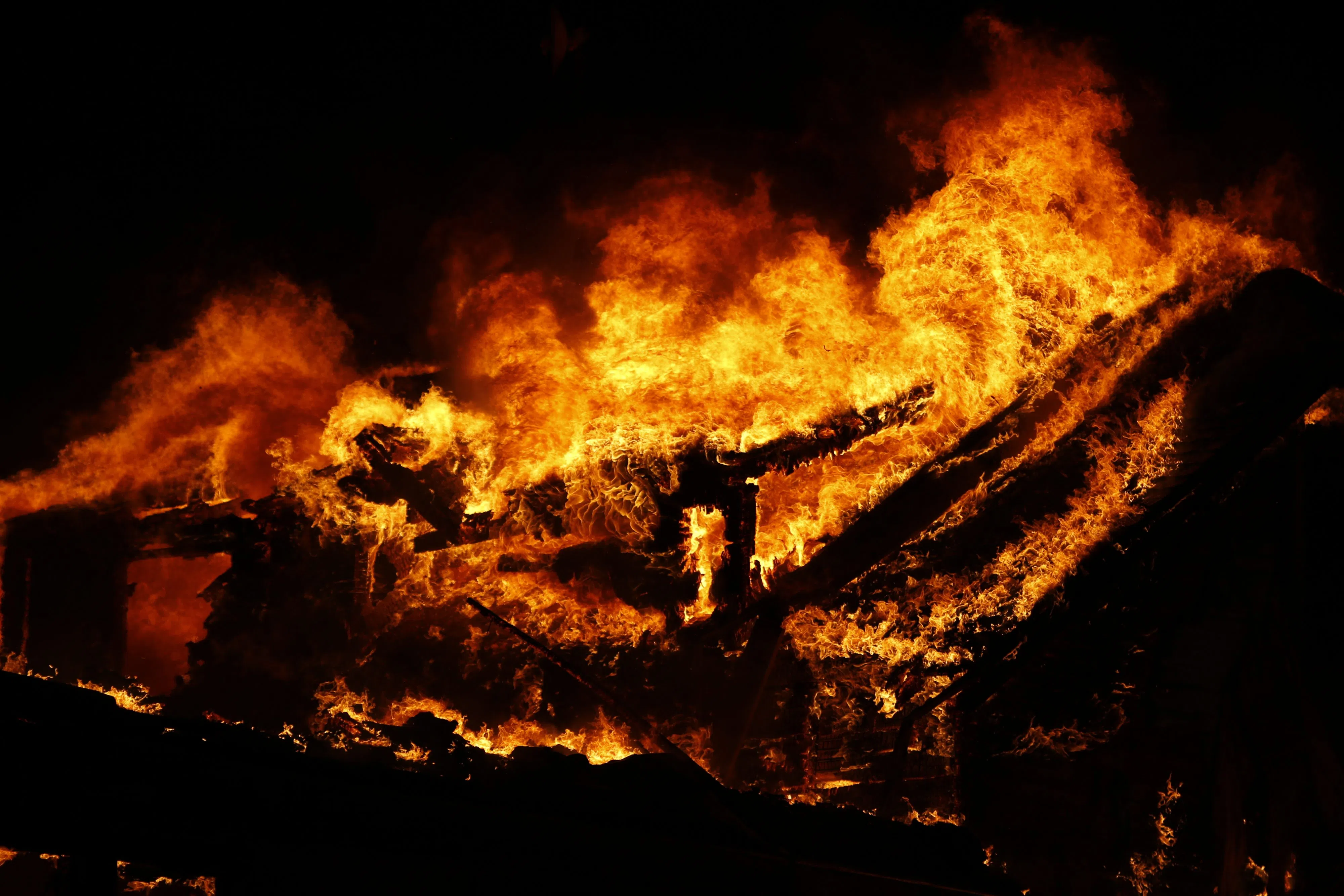
Fully involved structure fire, (Brian Neben, Courtesy)
KEARNEY — Every 24 seconds a fire department in the United States responds to a fire somewhere in the country, according to the National Fire Protection Association, NFPA.
As the winter months get closer, it becomes more imperative families and businesses practice fire prevention to prevent a disaster.
Here are some facts about fire related incidents from the NFPA, between 2013 and 2017 there were 19 fire deaths per year. People living in rural areas, those who smoke cigarettes, people with disabilities and households below the poverty line are at greater risk for fires.
The NFPA notes risk factors themselves do not cause fires, they do play a role showing who is at greater risk.
Across the United States a fire within a structure occurs every 63 seconds and a home fire occurs every 87 seconds. Home fires themselves were responsible for 11,200 civilian injuries and 74 percent of all fire deaths occur in the home.
Overall there was an estimated $25.6 billion in property damage as a result of fire in 2018, this is an increase from past years, this number includes the $12 billion loss in Northern California due to wildfires.
The leading cause of fires in the United States was caused by unattended equipment, the second leading cause is electrical fires, according to NFPA research.
Fires involving electrical failure or malfunctions accounted for the highest share of civilian deaths and direct property damage, nearly two of five fires involving electrical failure occurred during cold weather months from November through February.
The NFPA has several safety tips for electrical safety that include:
• Have all electrical work done by a qualified electrician.
• When you are buying or remodeling a home, have it inspected by a qualified private inspector or in accordance with local requirements.
• Only use one heat-producing appliance (such as a coffee maker, toaster, space heater, etc.) plugged into a receptacle outlet at a time.
Major appliances (refrigerators, dryers, washers, stoves, air conditioners, microwave ovens, etc.) should be plugged directly into a wall receptacle outlet. Extension cords and plug strips should not be used.
Contact a qualified electrician or landlord if you have:
• Frequent problems with blowing fuses or tripping circuit breakers
• A tingling feeling when you touch an electrical appliance
• Discolored or warm wall outlets
• A burning or rubbery smell coming from an appliance
• Flickering or dimming lights
• Sparks from an outlet
Smoke alarms are a key to providing an early warning of fire and give people additional time to escape. According to the NFPA, almost three out of every four home fire deaths resulted from fires in homes which did not have smoke alarms, or the alarms were not working.
“The death rate per 1,000 reported home fires was more than twice as high in homes that did not have any working smoke alarms either because no smoke alarm was present or an alarm was present but did not operate, as it was in homes with working smoke alarms,” per the NFPA website.
In fires which smoke alarms were present, but did not operate, 43 percent of the smoke alarms had missing or disconnected batteries and dead batteries account for 25 percent of smoke alarms failures.
Every family should have a fire escape plan already in place in the event of a fire in the home. The fire academy E.S.C.A.P.E. lists the following tips on their website:
Draw or map out the layout of your home, marking two exits from every room (typically a door and a window) and a path from each exit to the outside.
Pick a meeting place outside in front of your home where everyone will meet upon exiting (examples include a sidewalk, fence, driveway, or neighbor’s house).
Mark the location of all smoke alarms in your home. (There should be at least one on every level, in each bedroom, and near all sleeping areas).
Make sure everyone knows how to call 911 or the local emergency number from a mobile phone or neighbor’s phone once they’re safety outside.
Fire itself needs three ingredients in which to start and spread, the components are:
• Fuel – something which will burn
• Heat – enough to make the fuel burn
• Air – especially oxygen
All three components must be present at the same time to have a fire. Fire will burn until one or more of the components are removed and traditional fire extinguishing methods involve removing the fuel, heat, or oxygen, according to the NFPA.
In recent years a fourth component has been added, an uninhibited chain reaction, to explain the process of fire, which itself is rapid oxidation.
The chain reaction is the feedback to the fuel to produce the gaseous fuel use in the flame. This provides the heat necessary to maintain the fire. The goal of firefighters is to interrupt this chain reaction and remove a component from the process.
Fire Prevention Week this year runs from Oct. 6 through Oct. 12 and local fire departments throughout the county are raising awareness about how to prevent fires.
The week-long event actually traces its roots back to the Great Chicago Fire of 1871, the tragedy killed 300 people, left 100,000 homeless and destroyed over 17,000 structures. The fire burned more than 2,000 acres in 27 hours. Chicago quickly rebuilt and the successful restoration was memorialized with festivities, including a new impetus on fire prevention.