
By Cindy Workman
OMAHA, Neb. (Creighton Uni.) – Due to the spread of the highly transmissible omicron variant and the increase in COVID-19 cases, medical experts urge the public to take additional precautions. In addition to receiving the COVID-19 vaccine, booster shots and getting tested, Maureen Tierney, MD, chair of the Department of Clinical Research and Public Health in the Creighton School of Medicine, recommends individuals consider double-masking.
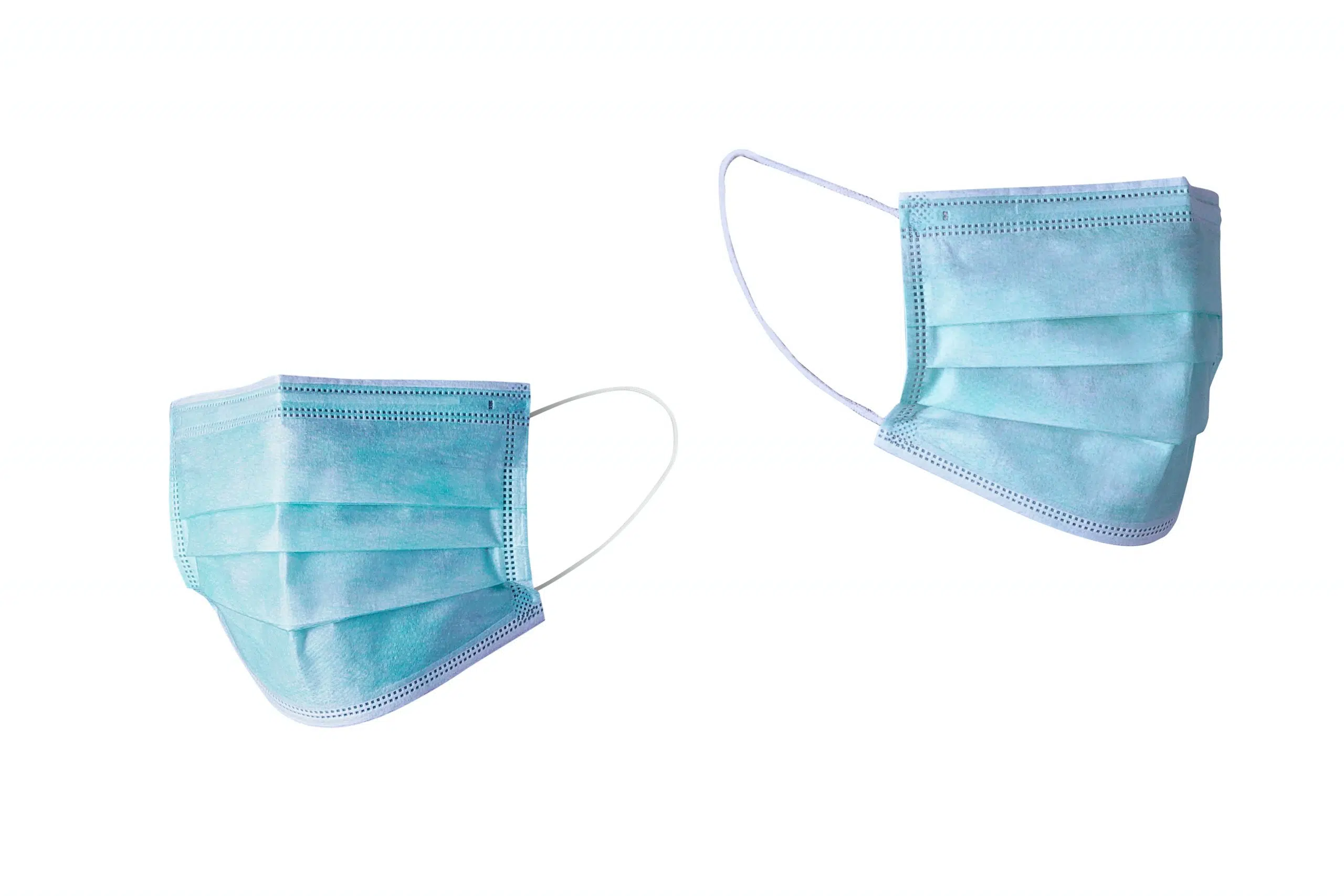
Tierney says double-masking by layering a well-fitted cloth mask over a surgical medical-grade mask provides increased protection and is a prevention measure being practiced by many health care providers to keep staff and patients healthy.
The contagiousness of the omicron variant and how quickly it is growing in communities across the United States highlights the importance for source control because individuals can infect others before showing any symptoms. New research published in the Journal of the American Medical Association indicates that approximately 40% of those who tested positive for COVID-19 in a recent study had no symptoms. The study sheds light on the potential transmission risk of asymptomatic infections in communities.
“Wearing a tight-fitting cloth mask and medical procedure (surgical) mask together can help limit spread of the virus that causes COVID-19 by helping with source control or substantially reducing exhaled respiratory particles from infected wearers and reducing exposure of uninfected wearers,” Tierney said.
Surgical masks have a good level of filtration, but they tend to fit more loosely than KN95 or N95 masks. Adding a well-fitted cloth mask can prevent air leakage and gaps from the edges of the masks, which helps protect the wearer from breathing in particles containing the virus. According to lab tests conducted by the Centers for Disease Control and Prevention, exposure to potentially infectious aerosols decreased by about 95% when a tight-fitting cloth mask was used over a medical procedure mask by both people in a room together.
When selecting a mask, quality matters. Tierney recommends a surgical mask with a nose bridge for the best protection, in addition to a multi-layer cloth mask made of a cotton poly blend. Ideally, both would be changed daily – the surgical face mask disposed of and the cloth mask laundered.
In regard to N95 and KN95 masks, Tierney says they are highly effective options due to their rigid filter. KN95s have higher filtration than surgical face masks. When worn properly, the CDC says N95 and KN95 masks can filter out at least 95% of airborne particles. N95s usually require fit testing to ensure they fit well and are generally reserved for clinical care settings. They also are difficult to wear for extended periods of time.
Some respirators are designed and tested to meet international standards. KN95s are the most widely available respirators that meet an international standard, according to the CDC. Respirators approved by the National Institute for Occupational Safety and Health (NIOSH) are evaluated against a specific US standard that includes a quality requirement. International standards do not often have quality requirements. Other options include DL2, DL3, DS2, DS3, FFP2, FFP3, KN100, KP95, KP100, P2, P3, PFF2, PFF3 and R95. The CDC says to beware of 60% KN95 respirators in the United States – they are counterfeit (fake) and do not meet NIOSH requirements. A webpage and webinar from the CDC share factors to consider when purchasing an international respirator.
In addition to mask wearing, Tierney recommends other preventative measures, including social distancing while indoors, increasing room ventilation, limiting meeting size and participating in remote meetings. She also urges people to get the COVID-19 vaccine, boosters and the flu vaccine.
About Creighton University: Creighton University, founded in Omaha, Nebraska, in 1878, is one of 27 Jesuit colleges and universities in the U.S. The Omaha campus has more than 8,000 undergraduate, graduate, and professional students among nine schools and colleges. No other university its size offers students such a comprehensive academic environment with personal attention from faculty-mentors. The new health sciences campus in Phoenix, which will accommodate more than 900 students, is the largest expansion outside of Omaha in Creighton’s history and positions the University as the largest Catholic educator of health professionals in the country. Creighton is ranked in the top third of National Universities by U.S. News & World Report.